
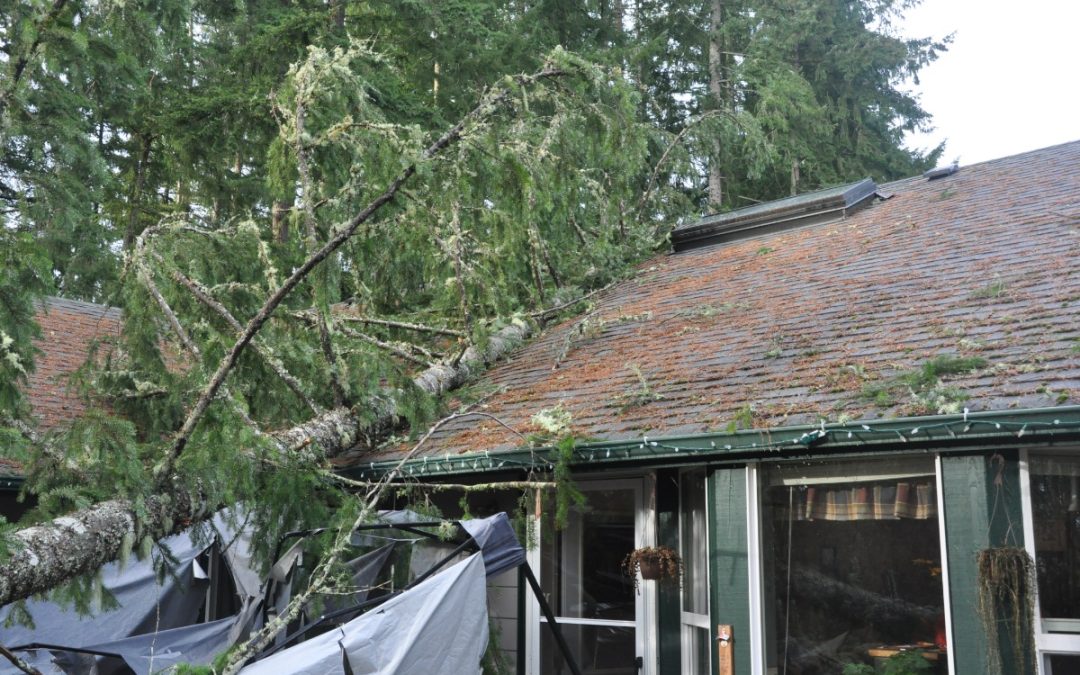
A storm just passed, and now there’s a tree through your roof. It’s alarming — but knowing the right steps to take will keep your family safe and get your home back in order faster. This guide walks through exactly what to do, and just as importantly, what not to do.
Who Needs to Worry About This Most?
Homes near the coast or in areas prone to high winds and severe storms face a higher risk of tree damage. Older or dying trees, and homes built on soft or saturated soil, are also more vulnerable — conditions common across Houston, Cypress, and The Woodlands after heavy rain saturates the ground and loosens root systems.
Factors That Increase the Risk
Tree age, species, root health, and recent soil moisture all play a role. Mature trees with visible decay or leaning trunks are far more likely to fail during high winds than younger, healthy trees.
What NOT to Do
Never climb onto your roof to inspect it yourself — especially right after the damage occurs. A compromised roof structure can collapse under additional weight, and Texas storm conditions make it even riskier to be on a wet, unstable surface. Stay clear of any area where the ceiling is visibly damaged, sagging, or shows water stains, since that section could give way without warning.
What to Do When a Tree Falls on Your Roof
Step 1 — Get to Safety
Evacuate the affected area if possible, or seal it off and avoid entering rooms at risk of further collapse.
Step 2 — Call Emergency Services
A falling tree can damage electrical or gas lines on its way down. Call emergency services first to rule out fire or electrical hazards before doing anything else.
Step 3 — Document the Damage
Once it’s safe, take photos of the exterior and any visible interior damage. This documentation will support any insurance claim you file later.
Step 4 — Call a Roofer That Offers 24/7 Emergency Service
Our emergency roofing and storm damage repair team responds fast to tarp, stabilize, and repair the damage — protecting the rest of your home from further exposure to weather.
What Happens During the Repair Process
After the immediate hazard is addressed, our team assesses structural damage, removes debris safely, and provides a full repair plan. In many cases, this includes coordinating directly with your insurance provider.
Temporary Protection Comes First
Before full repairs begin, we typically install a tarp or temporary covering to prevent further water intrusion. This is a critical step — even a short delay between the damage and temporary protection can lead to significant additional water damage inside your home.
Debris Removal Safety
Tree removal from a roof isn’t a DIY job. Branches and trunks can shift unexpectedly, and cutting into a tree resting on a damaged roof carries real risk. Our team coordinates safe removal before any repair work begins.
Filing an Insurance Claim for Tree Damage
Most homeowners insurance policies cover tree damage to your roof, but the process of filing a claim can be confusing, especially while you’re also dealing with the immediate disruption to your home. Photographing the damage as soon as it’s safe, keeping records of temporary repairs, and working with a roofer experienced in insurance coordination all help the process move faster.
CK Roofing Is Ready When You Need Us
Serving Houston, Tomball, Cypress, and surrounding communities, CK Roofing provides fast, reliable storm damage repair around the clock. If you’re also filing an insurance claim, our insurance claims support team can help you through the process from start to finish.
Frequently Asked Questions
Is tree damage usually covered by homeowners insurance?
In most cases, yes — but coverage details vary by policy. Our team can help you understand what your specific policy covers.
How fast can CK Roofing respond to emergency tree damage?
We offer 24/7 emergency response for storm-related roof damage across our Houston-area service area.
Get Help Now
Contact us now — we’re here 24/7.